


 by
In January 2020, six months into early retirement, I typed two numbers into a spreadsheet: our portfolio balance and the stock market’s CAPE ratio, 30.99. The formula returned 3.11%.
That number has guided every withdrawal we’ve made since.
The famous 4% rule says to withdraw 4% of your starting portfolio in year one, raise it with inflation each year, and you’ll likely be fine for 30 years. But my wife and I weren’t planning for 30 years. We were planning for 60 or more.
Five years later, our net worth buys more than it did the day we retired. Below are the formula we use, our real results, and what we’ve learned, plus a calculator so you can try it with your own numbers.
In this article
- What CAPE Measures and Why It Matters for Retirees
- Our CAPE-Based Withdrawal Formula
- Three Habits That Support the Formula
- Five Years of Results
- Why Our Withdrawals Ran Low, Then Spiked
- The Real Test: Purchasing Power
- What Five Years Taught Us
- Finding Your Own Withdrawal Rate
What CAPE Measures and Why It Matters for Retirees
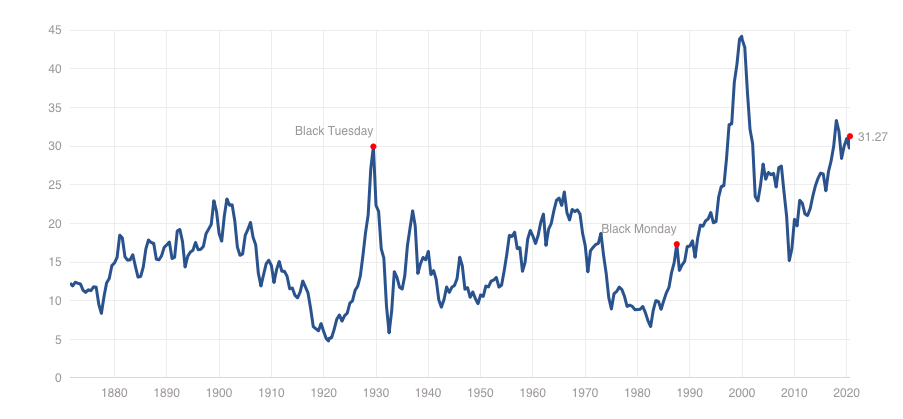
CAPE stands for Cyclically Adjusted Price-to-Earnings ratio. Economist Robert Shiller created it to compare stock prices with ten years of inflation-adjusted earnings. A high CAPE suggests stocks may be expensive. A low CAPE suggests they may be cheap.
For a retiree, that becomes a simple rule of thumb. When CAPE is high, withdraw cautiously. When it’s low, you can afford to be more generous. Think of it as a weather forecast for your portfolio: it tells you whether to bring the umbrella. forecast. It helps you decide whether to bring an umbrella (be conservative) or leave it at home (be a bit more generous with yourself).
CAPE ratio = price/average earnings for ten years, inflation-adjusted
Our CAPE-Based Withdrawal Formula
We use a variation of the CAPE-based method:
SWR = 1.5% + (0.5 × (1 ÷ CAPE))
We apply that rate to our current portfolio balance to set the year’s withdrawal. For us, it usually lands between 2.5% and 3.5%. That’s more conservative than 4%, and it responds to market conditions instead of ignoring them.
In January 2020, CAPE stood at 30.99, and the formula suggested about 3.11%. We rounded up to 3.25%, because life’s too short to fret over decimal points. Even so, that left thousands of dollars in our account compared with a 4% withdrawal, a cushion we were glad to have.
Try it yourself: Our CAPE-based withdrawal calculator takes two inputs, your portfolio balance (for example, $1,000,000) and the current CAPE ratio from [multpl.com]. Click “Calculate Safe Withdrawal Rate” to see your suggested rate and how much you can withdraw this year.
Three Habits That Support the Formula
The formula is the backbone of our plan, but three habits keep it steady:
- We keep dividends as cash instead of reinvesting them, which gives us extra liquidity.
- We’ve started a Roth IRA conversion ladder to reach retirement funds before age 59½.
- We watch sequence-of-return risk closely. That’s a topic for its own post.
Five Years of Results
Here’s how our actual withdrawals compared with the 4% rule and with what our CAPE formula recommended:
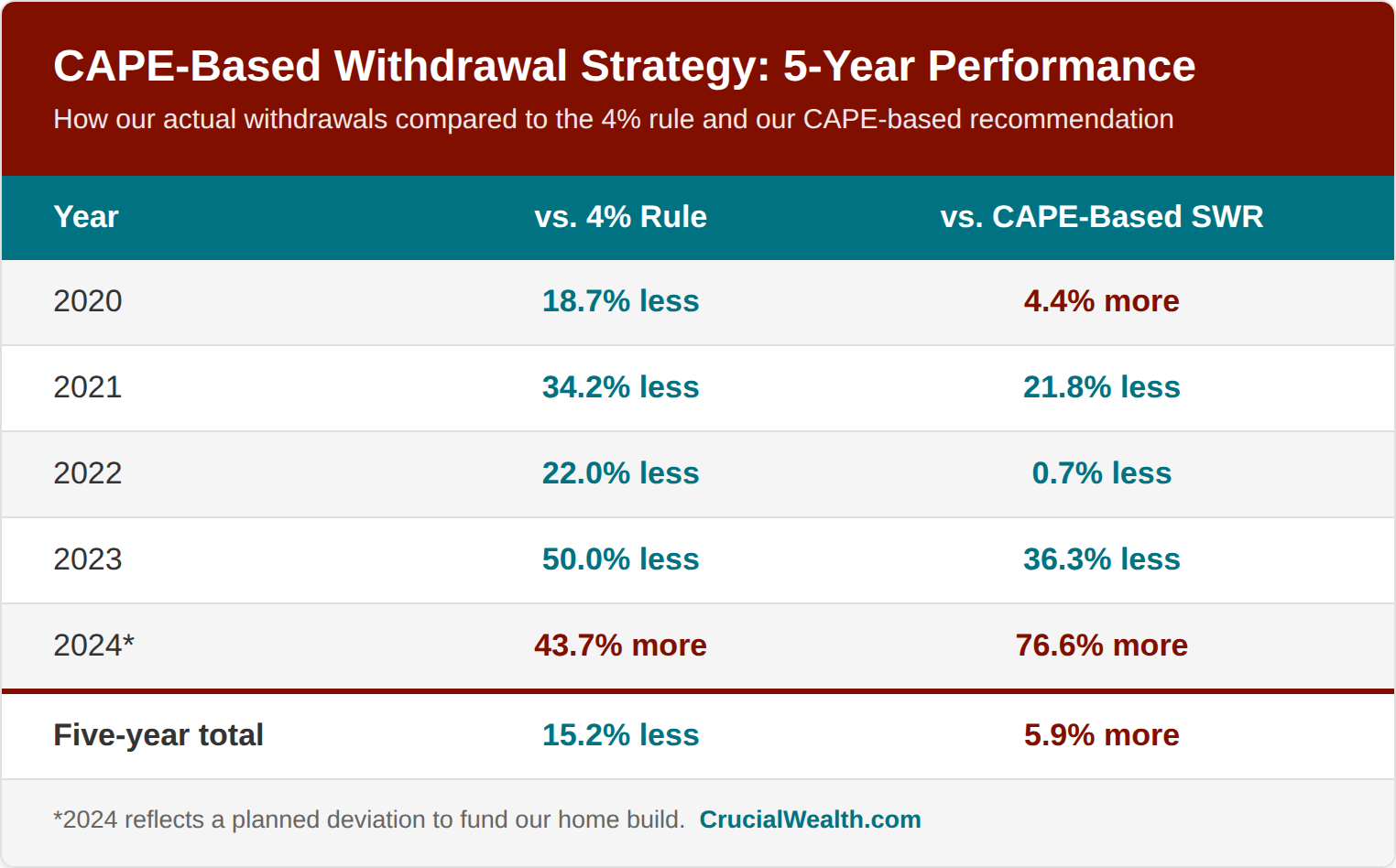
Three things stand out:
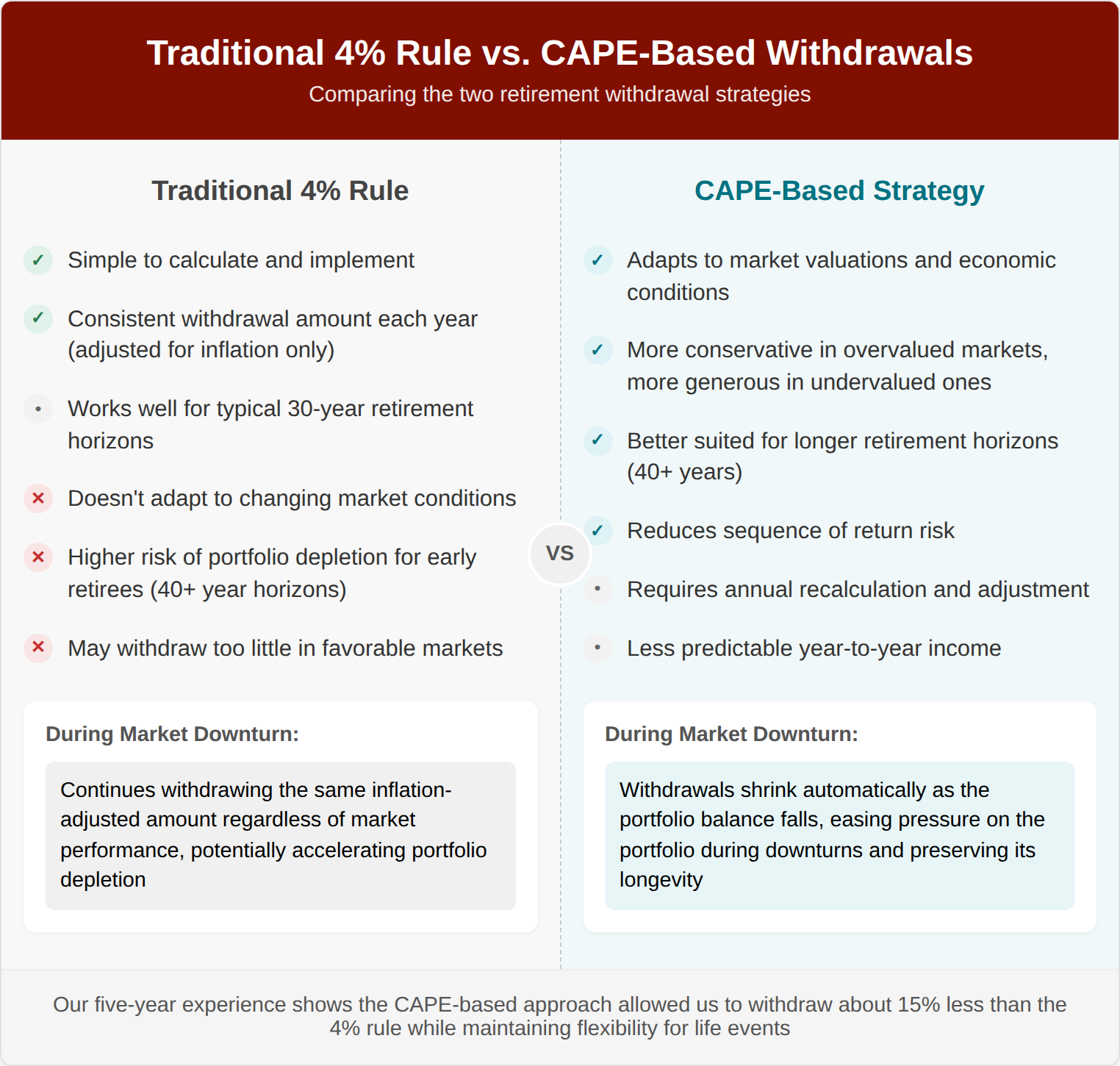
The formula is consistently conservative. Each year, it recommended roughly 15–20% less than the 4% rule, a better fit for a retirement that could last six decades.
We stayed well under the 4% rule for four straight years. In 2023, we withdrew half of what it allowed.
2024 broke the pattern on purpose. We began building our home, and withdrawals ran 43.7% above the 4% rule and 76.6% above our formula.
Even with that spike, our five-year total came in about 15% below the 4% rule and only about 6% above our CAPE recommendation.
Why Our Withdrawals Ran Low, Then Spiked
Our formula didn’t do all the work. Three other factors kept withdrawals low in the first four years:
- Rental property sale: Since 2023, proceeds from selling our rental have covered part of our living expenses.
- Mortgage cash cushion: When we bought our current home in 2020, we took out a mortgage instead of paying cash, which kept a healthy reserve on hand.
- Portfolio growth: Our investments grew over the first four years despite withdrawals, adding a buffer against inflation.
Because the rental proceeds and cash reserve covered part of our spending, our portfolio withdrawals understate what we actually spent in those years. Keep that in mind before you compare your numbers to ours.
Then came 2024. Building our home required much larger withdrawals, and we expect at least one more year above our formula before returning to normal. We see this less as spending and more as reallocation, shifting money from stocks into real estate while keeping our overall net worth intact.
This is where a formula earns its keep. It gives us a benchmark, so we know exactly how far we’re deviating and can decide when a deviation is worth it.
The Real Test: Purchasing Power
Not running out of money is the minimum. The real measure of a retirement plan is whether your money still buys what it used to. Inflation compounds quietly, and a dollar today doesn’t stretch as far as it did in 2019.
We’ve tracked our net worth’s real purchasing power every year since we retired:
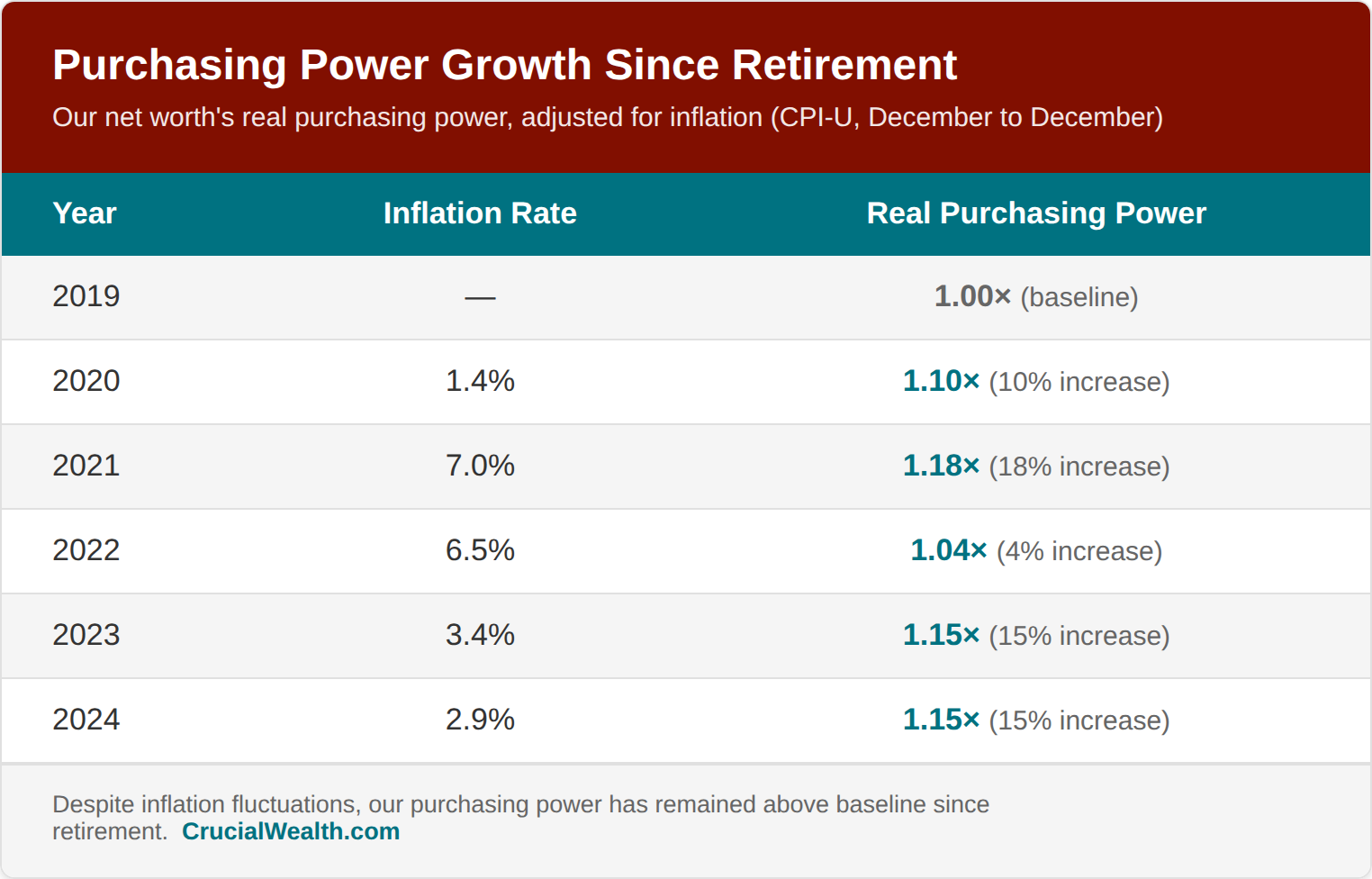
Despite five years of withdrawals and the highest inflation in decades, peaking at 7.0% in 2021, our net worth’s real purchasing power is up 15%. We can buy more today than the day we retired.
It wasn’t a straight line. Purchasing power dipped noticeably in 2022, on the heels of that inflation spike, then recovered in 2023 as markets rebounded and inflation cooled.
Strong markets did much of the heavy lifting. But a conservative withdrawal rate kept more of our money invested to benefit from them.
What Five Years Taught Us
A conservative formula lets us sleep at night. Because ours recommends roughly 15–20% less than the 4% rule, we’re confident our portfolio can weather market cycles across a 60-year retirement.
Treat the formula as a guideline, not a rulebook. Withdrawing half of the 4% amount in 2023 built the cushion that made 2024’s construction withdrawals less stressful.
Lean years make big years possible. Our lowest-withdrawal years, especially 2021 and 2023, gave us room for the home project without jeopardizing the long-term plan.
Multiple income streams create options. Rental proceeds, dividends, and a strategic mortgage decision gave us choices beyond selling investments to fund our lifestyle. That matters most when markets fall.
Purchasing power is the scoreboard. A 15% real gain after five years tells us more than any single year’s withdrawal rate.
Finding Your Own Withdrawal Rate
We’ll keep using this approach, refine it as we learn, and return to our normal pattern once the house is finished. If five years have taught us one thing, it’s that the best withdrawal plan pairs math you trust with room for real life.
Your plan may look different from ours, and it should. Start with a formula, test it against your own numbers, and adjust as life happens.
Want to experiment? Use the [calculator], or make a copy of our [read-only spreadsheet] and customize it.
If you’re retired or getting close, how are you handling withdrawals? Tell us in the comments.
This content is for informational and educational purposes only and should not be considered financial advice or a recommendation to follow any particular investment or withdrawal strategy. Before implementing any retirement withdrawal approach, please consult with a qualified financial professional who can provide personalized guidance based on your unique circumstances.



Thanks for this, very interesting. Would you adjust the actual withdrawal for inflation? I cannot see that in the spreadsheet, or am I missing something?